

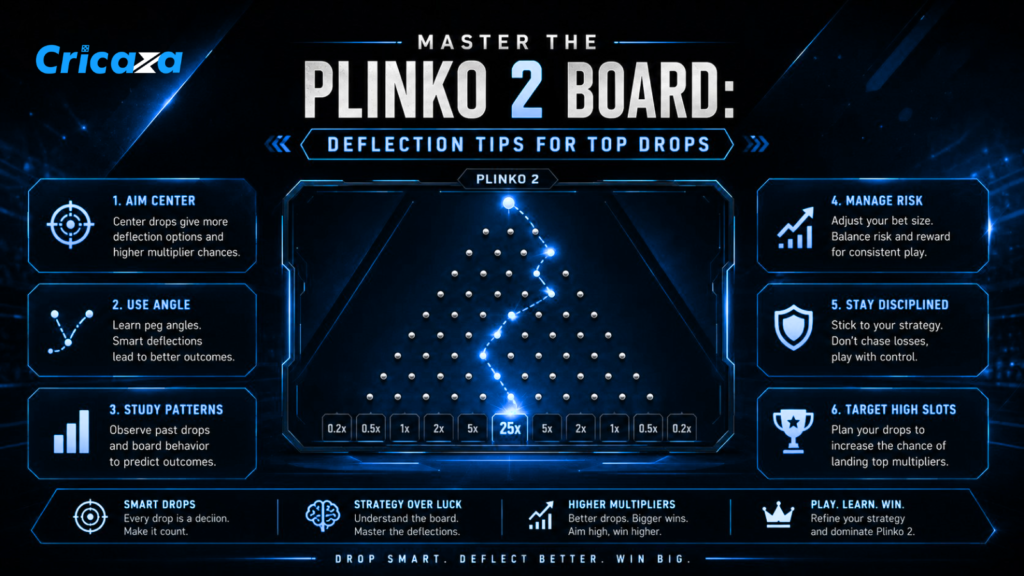
The Plinko 2 board is built on simple movement, steady timing, and smart deflection choices. Every drop is shaped by peg angles, row density, and the way the ball reacts to the adjustable peg matrix layout. When players understand how these elements work together, they can guide the ball toward high coefficient target zones with more confidence.
This Cricaza blog breaks down the board’s behaviour, the best deflection habits, and the small adjustments that help players reach top lanes more often.
Understanding the Adjustable Peg Matrix Layout
The adjustable peg matrix layout is the heart of Plinko 2. Each peg controls a tiny part of the ball’s movement, and together they create the full path from top to bottom. When players understand how peg spacing and angles affect bounce rhythm, they can identify early movement more clearly.
Peg Matrix Basics
The peg matrix defines the first few hits, which then impact if the ball moves inward, outward, or stays centred. Wider spacing creates smoother flow, in contrast, tighter spacing leads to sharper deflections. Reading this pattern helps Cricaza users to choose the right drop zone.
Row Density Metrics
Row density metrics show how tightly packed each row is. Dense rows create quick, sharp bounces that can push the ball toward the edges. Lighter rows allow calmer movement and smoother transitions. Knowing which rows create sharper reactions helps players plan their drops.
BGaming Interface Configuration
The BGaming interface configuration gives players clear visual cues. The board layout, peg highlights, and drop markers help players track movement and adjust timing. This simple interface makes it easier to understand how the ball reacts to each peg cluster.
Plinko 2 Deflection Tips for Better Control
Smart deflection is the key to reaching top lanes. These Plinko 2 deflection tips help players guide the ball through the board with more control and fewer unpredictable bounces.
Start with Soft Drops
Soft drops help players read early peg behaviour. A gentle release reduces sudden bounces and gives the ball a smoother start. This calm beginning often leads to more typical mid‑board movement.
Use Edge Pegs for Redirects
Edge pegs are powerful tools for redirecting the ball inward. A left or right drop can guide the ball toward the centre, where high coefficient target zones are easier to reach. Edge specialists often rely on this method for controlled movement.
Centre Drops for Balanced Trajectory
Centre drops create balanced ball drops trajectory. The ball moves through the board with fewer sharp turns, making it easier to figure out the final lane. This is a reliable choice for players who prefer steady, controlled runs.
Watch Mid‑Board Peg Clusters
Mid‑board clusters decide the final direction of the ball. A small deflection here can shift the ball toward a high‑value lane or push it outward. Watching how the ball reacts in this section helps players adjust their next drop.
Adjust After Every Drop
Plinko 2 rewards adaptive action. After each drop, players should adjust their strategy based on recent movement. If the ball drifts left, try a centre or right drop next. If it moves inward smoothly, repeat the same zone.
Key Players in Plinko 2 Strategy
Many players deal with the board in distinct ways, and each style offers specific advantages.
- The Angle Reader: This player studies peg angles and determines a bounce direction with calm precision.
- The Rhythm Watcher: This player waits for the right board rhythm before dropping, trusting timing over speed.
- The Edge Specialist: This player prefers left or right drops, using edge pegs to guide the ball inward.
- The Centre Controller: This player focuses on centre drops to create balanced, consistent paths.
- The Adaptive Dropper: This player changes strategy based on recent board movement and peg reactions.
Key Moments & Highlights
These moments show how small deflections shape the final result.
- Perfect Edge Redirect: A clean inward slide after two smooth peg hits.
- Smooth Centre Glide: A calm centre drop that moves through the mid board without sharp turns.
- Double Peg Shift: Two quick peg hits change the ball’s direction at the right time.
- Late‑Board Drift: A gentle drift left or right near the bottom lanes.
- Top‑Zone Entry: A clean entry into a high target zone after a steady run.
Ball Drops Trajectory – Match Flow Pointers
Reading the ball’s movement helps players make better decisions.
- Read Early Peg Movement: Early peg hits set the tone for the entire run.
- Track Mid‑Board Rhythm: Mid‑board rhythm decides the final direction of the ball.
- Use Timing to Control Bounce: Timing affects peg contact and deflection angles.
- Shift Drop Zones When Needed: Switch zones based on recent results.
- Aim for High Coefficient Target Zones: Smart deflection increases the possibility of reaching top lanes.
Key Figures
- The board uses 36 pegs.
- There are 3 drop zones.
- The board ends with 7 reward lanes.
- A single drop creates around 14 peg hits.
- Centre drops offer a 22% likelihood of reaching a high coefficient target zone.
What This Means for Your Plinko 2 Session
Mastering deflection, peg layout, and trajectory reading leads to more stable paths and better lane entries. Plinko 2 rewards calm attention, steady timing, and some adaptive strategy. When players are familiar with how the board runs, they can guide the ball toward top lanes with a sense of assurance.
Conclusion
At Cricaza, Plinko 2 is built on simple movement, smart deflection, and steady timing. When players learn how peg angles, row density, and drop zones shape the ball’s path, they gain more control over each run. Practise different drop zones, trust the board’s rhythm, and adjust after every drop. These small habits lead to smoother movement and more top‑lane results.